
Field guide
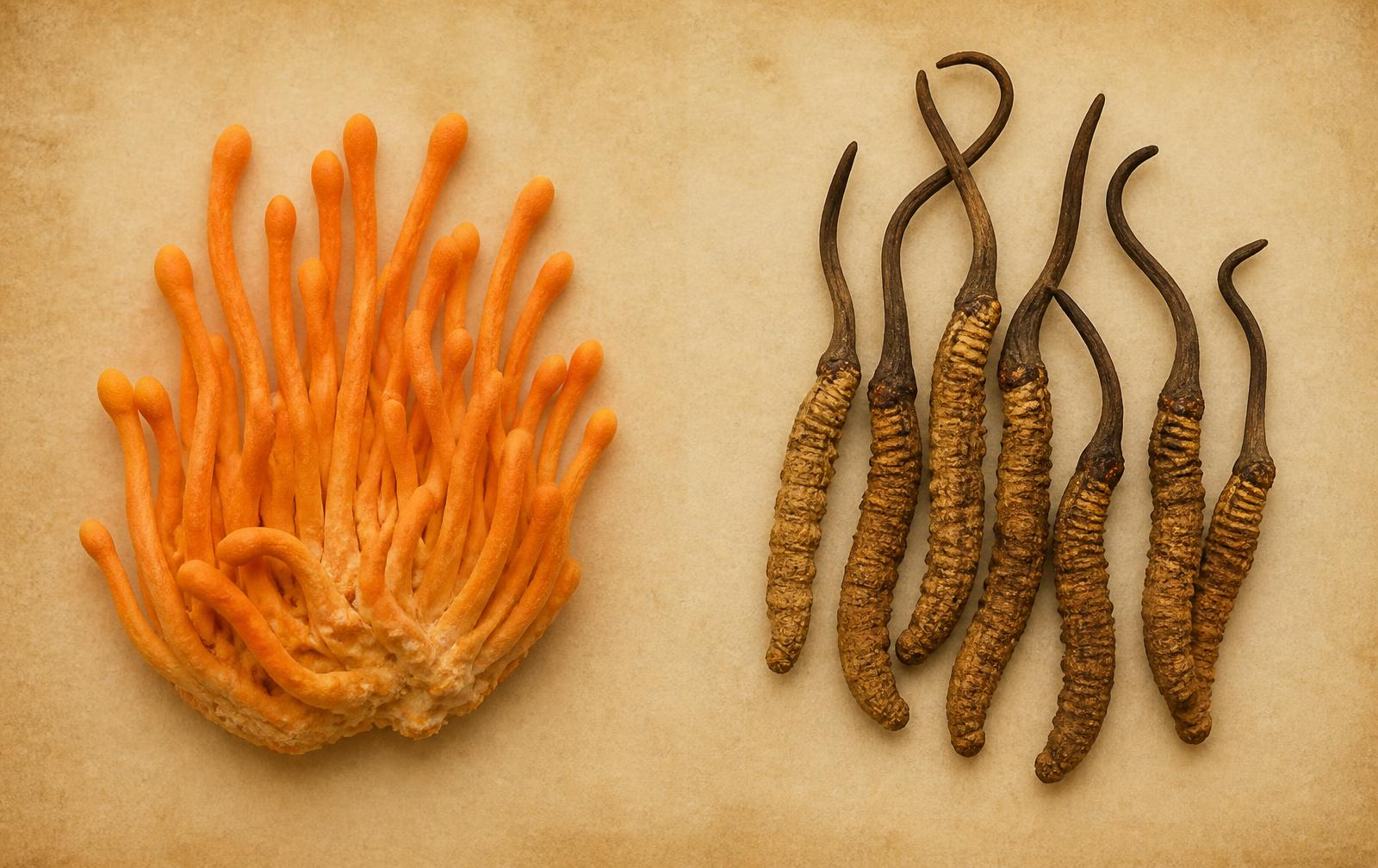
Cordyceps militaris vs Cordyceps sinensis
Wild yarsagumba and lab-grown Cordyceps militaris share a genus, but not the same chemistry, sourcing or ecological impact.
Both are called Cordyceps, yet their species differ in origin, cordycepin content, and how they reach the market. This guide explains why we cultivate C. militaris.
Quick Answer / Summary
Field notes
The wild cousin: Cordyceps sinensis
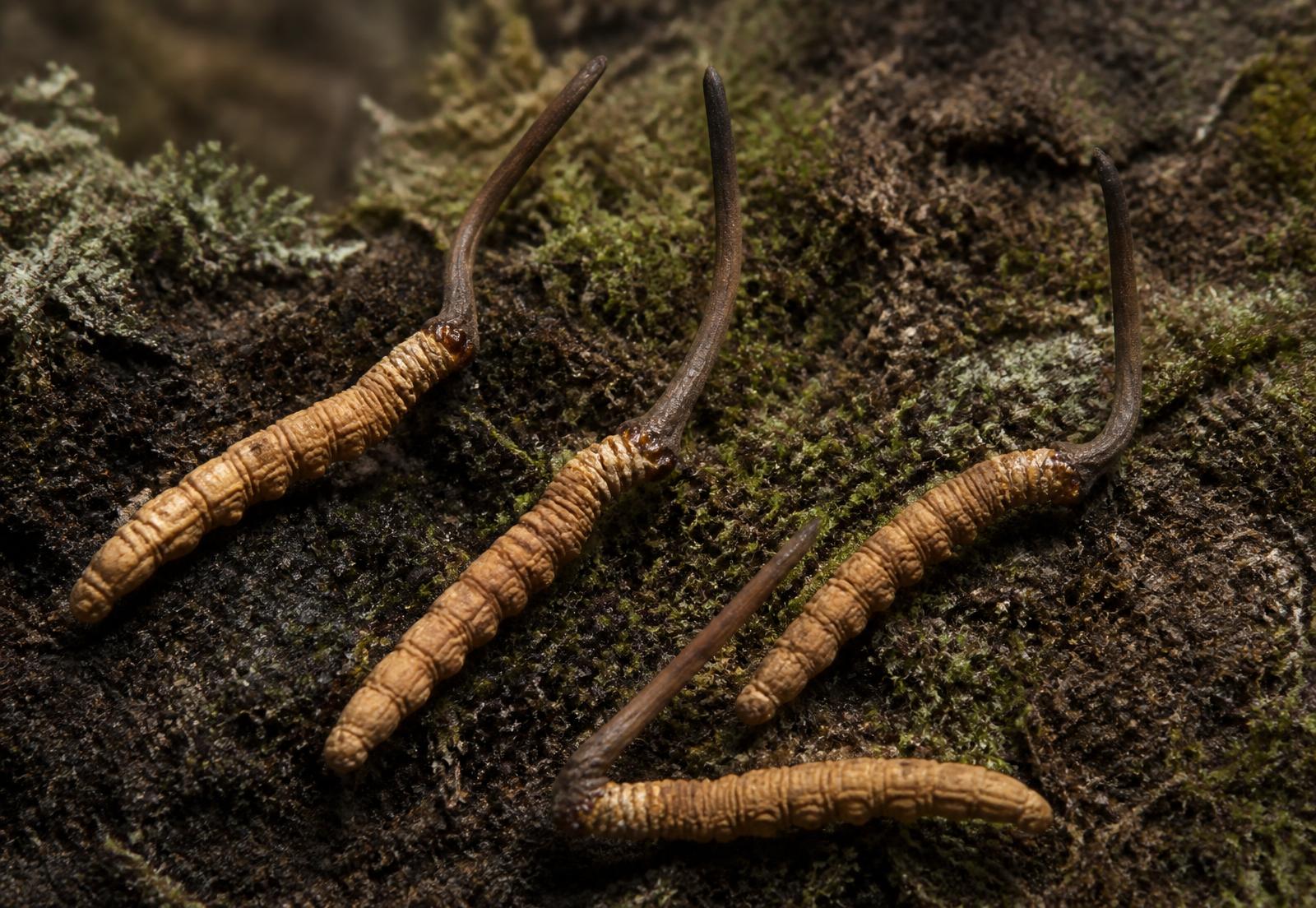
Also called Ophiocordyceps sinensis, yarsagumba or keeda jadi — the caterpillar fungus that made the genus famous. It is a different species from the one we cultivate, and the difference matters.
Origin
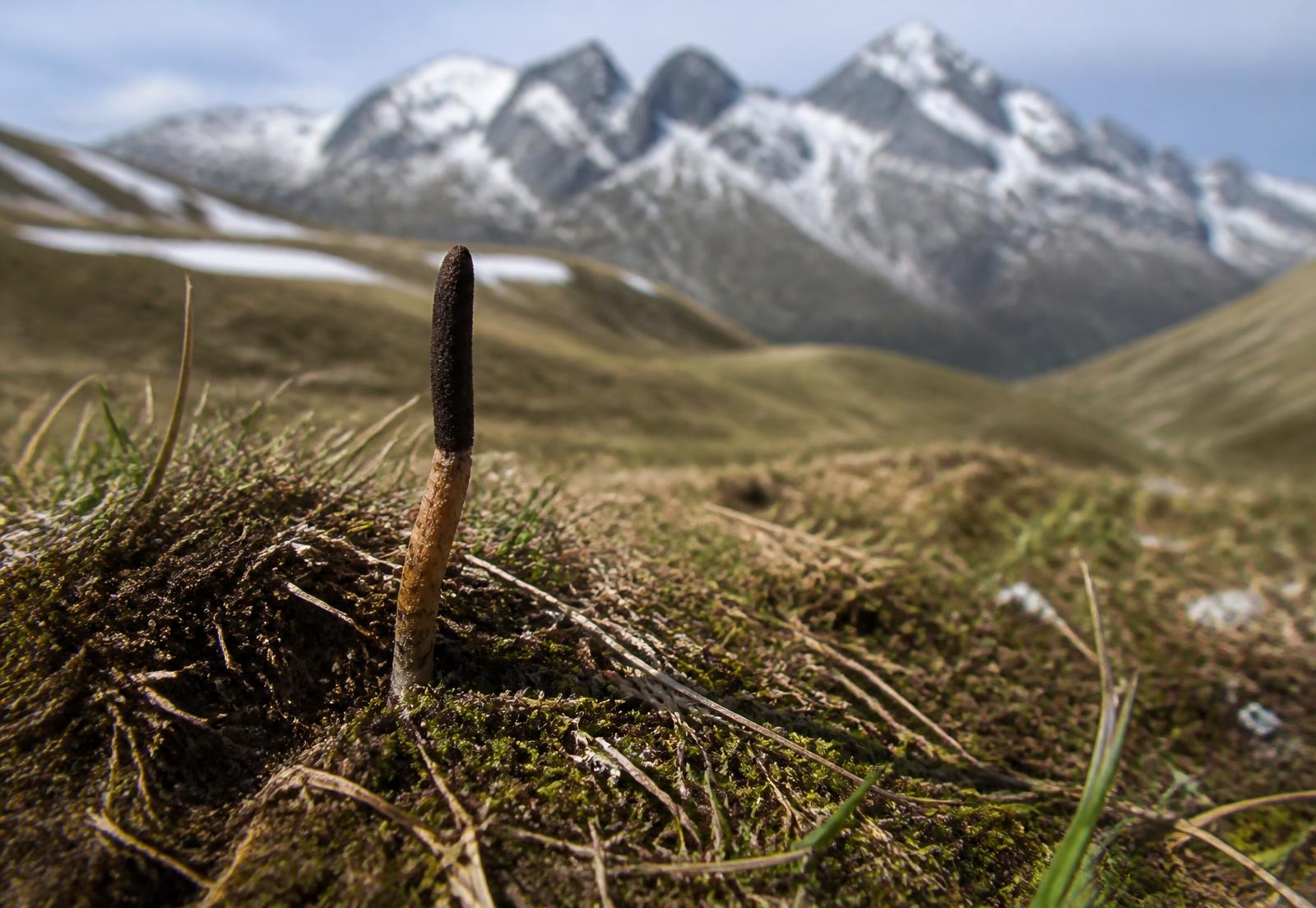
Wild only — parasitises ghost moth larvae in Himalayan soil.
Habitat
Alpine meadows roughly 3,000–5,000 m across the Himalaya and Tibetan plateau.
Appearance
Brown caterpillar body with a single dark, slender club emerging from the head.
Cordycepin
Low to trace in most authenticated wild specimens.
Supply
Scarce, expensive and under conservation pressure from over-harvesting.
Why we cultivate militaris. Wild sinensis cannot be farmed, is frequently adulterated in the market and is ecologically fragile. C. militaris gives the same key nucleosides in a verifiable, repeatable and cruelty-free form.