
Radhvan — Rooted in values, Growing with Vision
HomeWhy RadhvanCordyceps StudyCultivation & TrainingResearch & KnowledgeContact
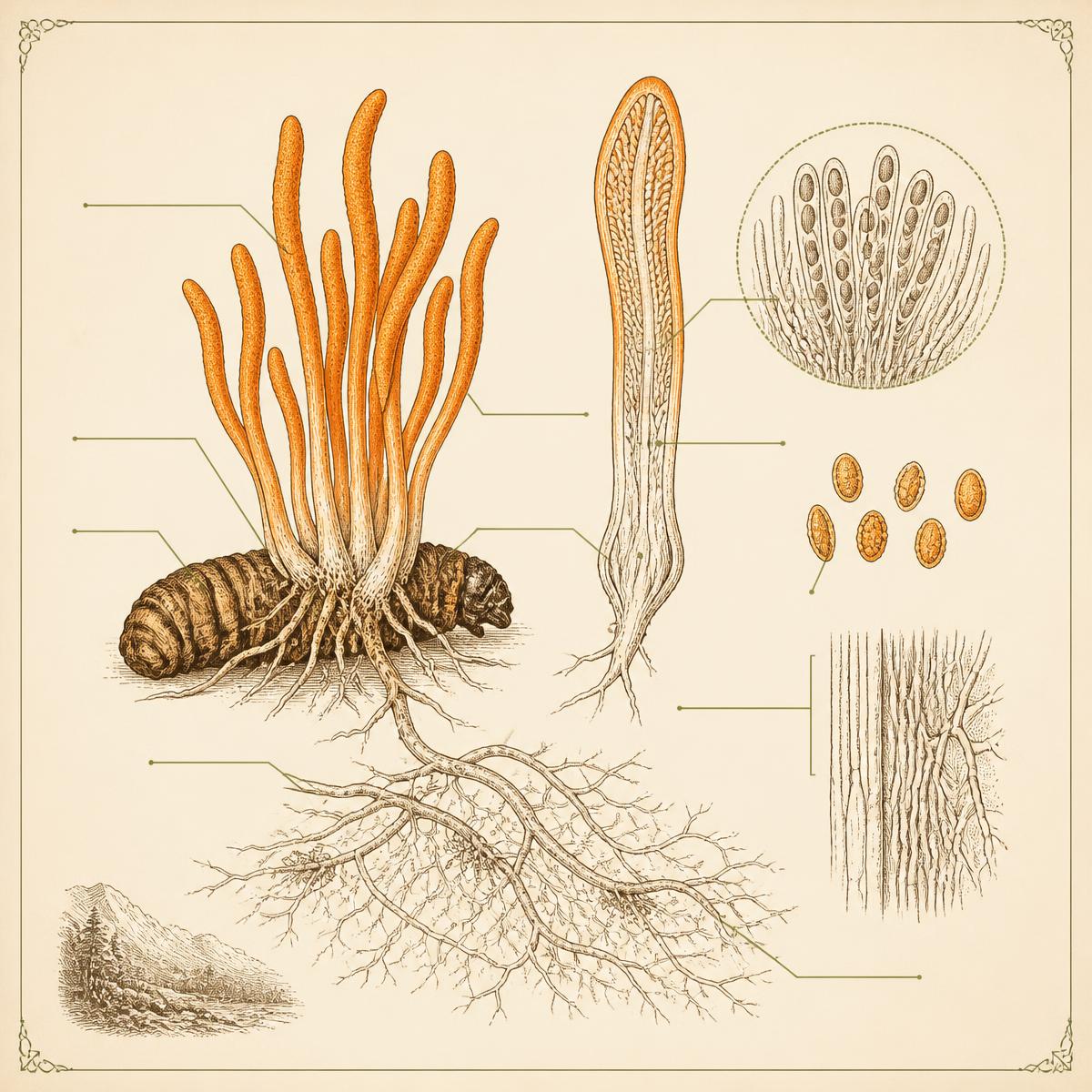
Botanical anatomy plate of Cordyceps militaris showing stroma, ascus and spore detail

Molecule

Cordycepin: the nucleoside behind Cordyceps

Cordycepin (3′-deoxyadenosine) is the most studied compound in Cordyceps militaris. Learn why it is used as a quality marker and where research is heading.

Structurally close to adenosine, cordycepin appears in cell-growth, mood, circulation, skin and joint studies. Its content is measured, not assumed.

Quick Answer / Summary

Cordycepin (3′-deoxyadenosine) is a natural purine nucleoside analogue found in high concentrations in Cordyceps militaris. It serves as the primary scientific quality marker because of its active role in cellular growth regulation, inflammation, and metabolic research, quantified via HPLC testing.

Chapter three

The compounds worth naming

Select a compound to read its role. These are the constituents laboratories actually measure — not marketing language.

C₁₀H₁₃N₅O₃

Cordycepin

3′-deoxyadenosine, the molecule most associated with the genus. Structurally near-identical to adenosine, which is why it is the primary marker used to grade material.

Typical assay target: 0.3–1.2% by dry weight

Keep reading

Related guides

vs Sinensis

Wild vs cultivated species

Health benefits

What the studies actually say

Cultivation

Lab-grown, not wild-harvested

FAQ

Common questions answered

Radhvan — Rooted in values, Growing with Vision

Explore

  • Home
  • Cordyceps Study
  • Cultivation & Training
  • Research & Knowledge
  • Why Radhvan

Guides

  • Militaris vs Sinensis
  • Health Benefits
  • Cordycepin
  • FAQ

Get in touch

  • info@radhvanorigins.com
  • WhatsApp
  • Contact page
  • Jaipur, Rajasthan, India
Radhvan Origins — Welcome. Together.

Educational content only. Not medical advice. © 2026 Radhvan Origins.