Questions
Cordyceps FAQ: common questions answered
Answers to frequently asked questions about Cordyceps militaris, cordycepin, Cordyceps sinensis, safety, cultivation and product availability.
Quick, honest answers about species, fruiting bodies, quality markers, who should avoid it, and when Radhvan Origins products will be available.
Quick Answer / Summary
Chapter ten
Questions, answered straight
No. The wild Himalayan species is Ophiocordyceps sinensis. C. militaris is a related species that can be grown on plant substrate and produces a true fruiting body, which is why it is used in modern products.
In nature, yes — Cordyceps species parasitise insect larvae. Cultivated C. militaris for nutritional use is grown on sterile plant-based media, with no insect material involved.
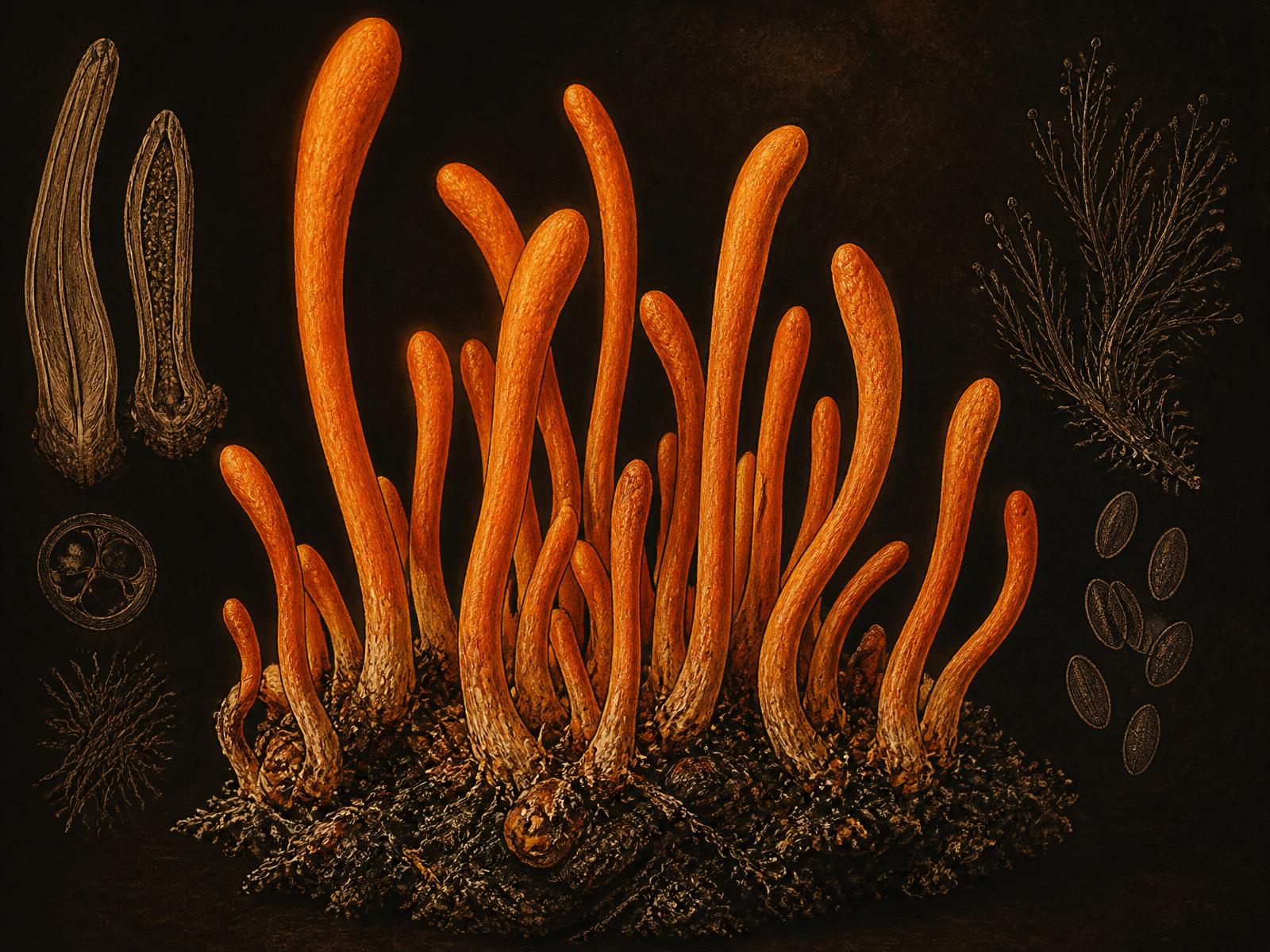
The fruiting body is the visible orange structure, distinct from the mycelium that grows underneath. Products made from mycelium grown on grain have a different composition, so the distinction changes what you are actually buying.
It is the most useful single marker, but not the whole picture. Reputable material reports cordycepin alongside adenosine, moisture and contaminant testing from an accredited laboratory.
Anyone pregnant or nursing, on immunosuppressants or anticoagulants, or preparing for surgery should speak with a clinician first. Fungal allergies are also a consideration.
We are still in the cultivation and verification phase. Joining the list is the only way to be notified when the first batch is released.