Radhvan — Rooted in values, Growing with Vision
HomeWhy RadhvanCordyceps StudyCultivation & TrainingResearch & KnowledgeContact

प्रकृति को समझना, उसकी गहराई को जानने की पहली सीढ़ी है।

Understanding nature is the first step to knowing its depth.

Chapter one

What Cordycepsactually is

Cordyceps is a genus of ascomycete fungi that grows on insect hosts in the wild. The species used in modern nutrition, Cordyceps militaris, produces a bright orange fruiting body and is now grown entirely on sterile plant-based substrate.

  • Spore

    A microscopic ascospore lands and germinates — the entire organism starts here.

  • Mycelium

    Thread-like hyphae colonise the substrate, forming a dense white network.

  • Stroma

    Under light and cool air the fungus raises orange clubs — the harvested part.
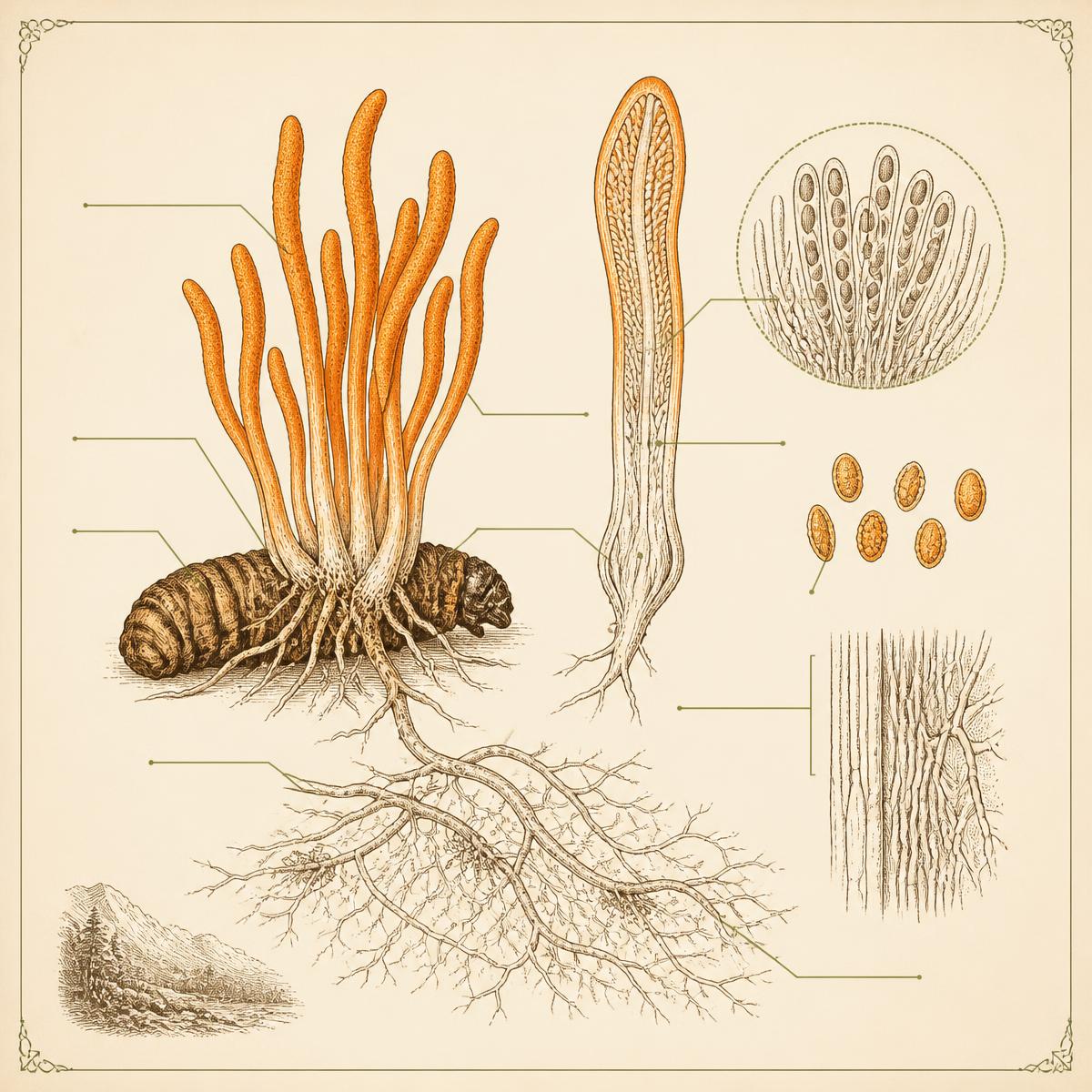
Naturalist plate showing Cordyceps militaris anatomy, cross-section and mycelial network
Plate I — Morphology of C. militaris: stroma, ascus detail, ascospores, mycelial mat. Original illustration for Radhvan Origins.

Field notes

The wild cousin: Cordyceps sinensis

Also called Ophiocordyceps sinensis, yarsagumba or keeda jadi — the caterpillar fungus that made the genus famous. It is a different species from the one we cultivate, and the difference matters.
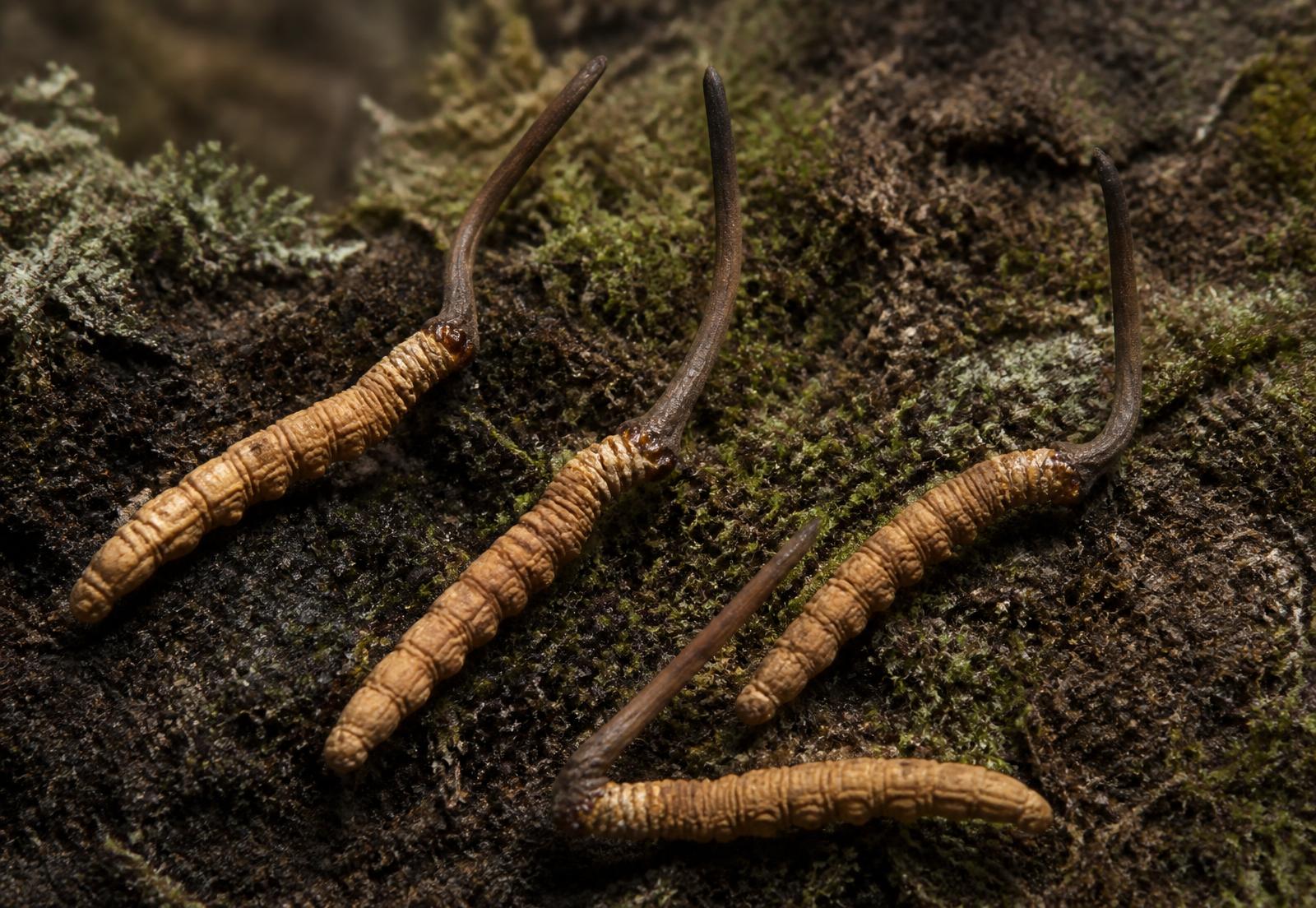
Wild Cordyceps sinensis specimens — caterpillar bodies with dark fungal clubs on mossy highland soil
Wild-form morphology: the fungus consumes the larva and pushes a single stalk above the soil.
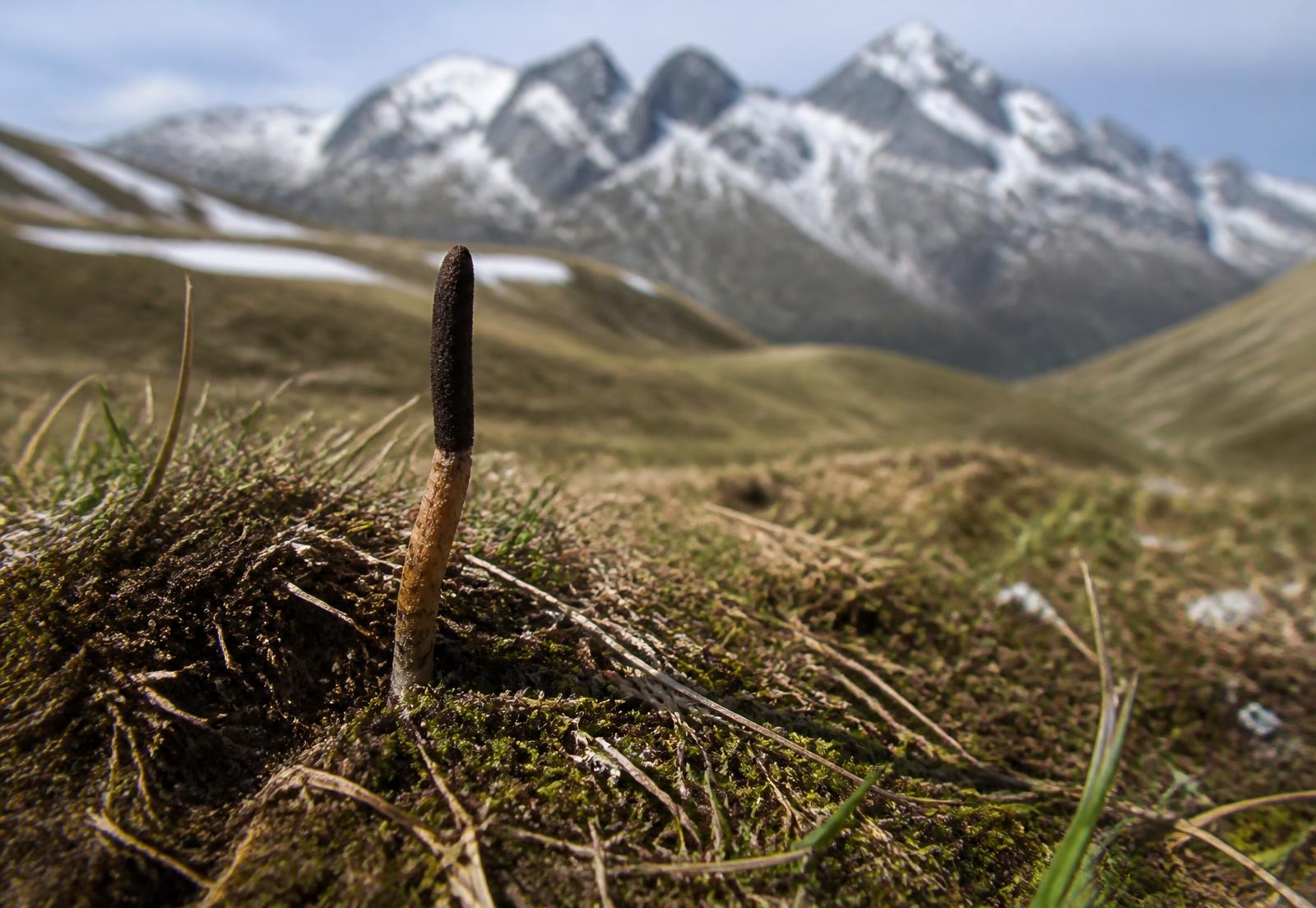
Cordyceps sinensis emerging from alpine turf with snow-dusted Himalayan ridges behind
Native habitat: cold, thin-aired highland meadows where the season lasts only a few weeks.
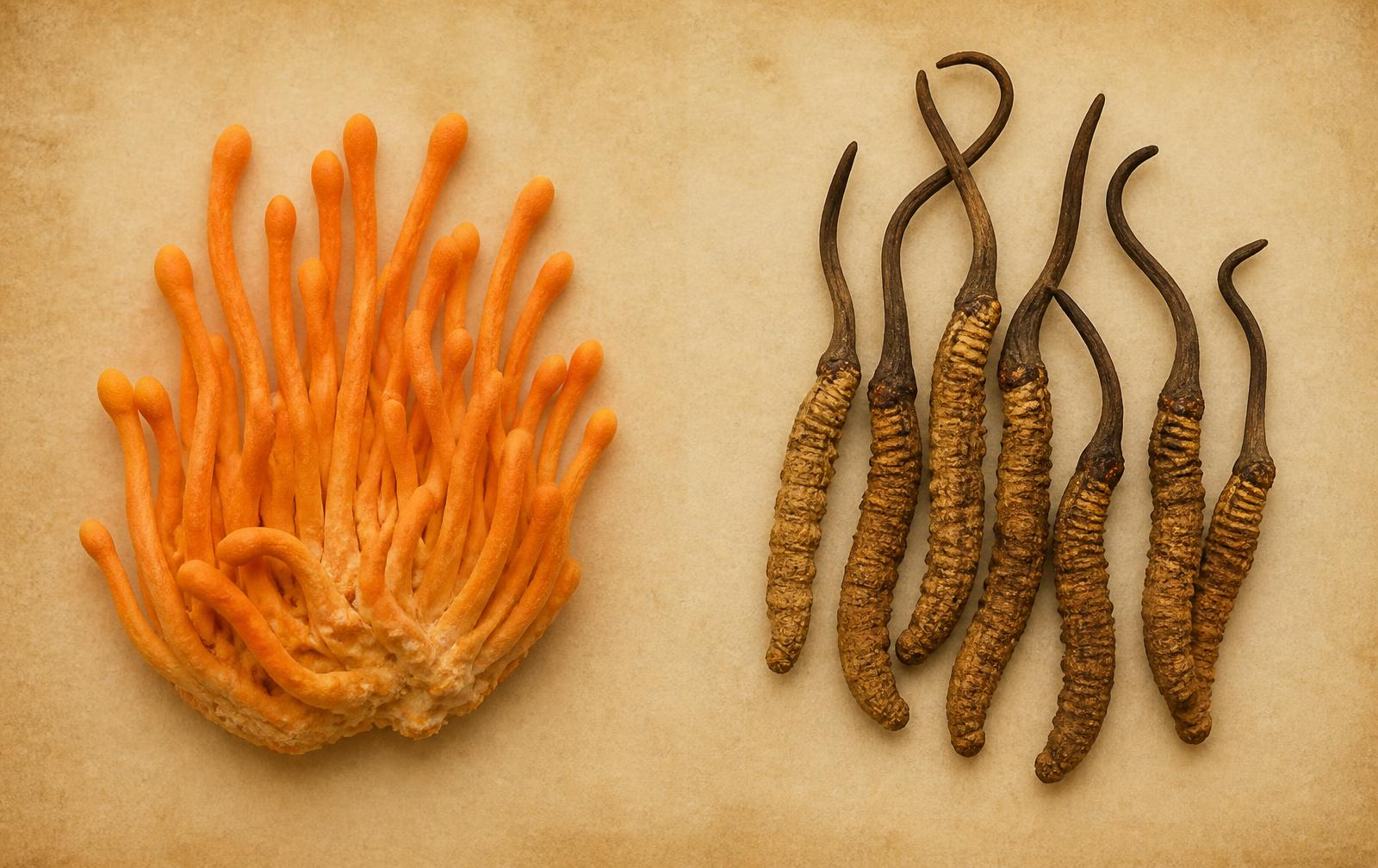
Comparison plate: orange Cordyceps militaris cluster beside dried wild Cordyceps sinensis specimens
Left: C. militaris, lab-cultivated. Right: wild C. sinensis.
AspectC. sinensis (wild)C. militaris (ours)

Origin

Wild only — parasitises ghost moth larvae in Himalayan soil.

Cultivated on a sterile plant-based substrate, no insect host.

Habitat

Alpine meadows roughly 3,000–5,000 m across the Himalaya and Tibetan plateau.

Controlled cultivation rooms with regulated light, humidity and air exchange.

Appearance

Brown caterpillar body with a single dark, slender club emerging from the head.

Bright orange fingered fruiting bodies growing in dense clusters.

Cordycepin

Low to trace in most authenticated wild specimens.

Consistently higher and measurable, which is why it is graded by assay.

Supply

Scarce, expensive and under conservation pressure from over-harvesting.

Reproducible, traceable and harvested without touching wild populations.

Why we cultivate militaris. Wild sinensis cannot be farmed, is frequently adulterated in the market and is ecologically fragile. C. militaris gives the same key nucleosides in a verifiable, repeatable and cruelty-free form.

Radhvan — Rooted in values, Growing with Vision

Explore

  • Home
  • Cordyceps Study
  • Cultivation & Training
  • Research & Knowledge
  • Why Radhvan

Guides

  • Militaris vs Sinensis
  • Health Benefits
  • Cordycepin
  • FAQ

Get in touch

  • info@radhvanorigins.com
  • WhatsApp
  • Contact page
  • Jaipur, Rajasthan, India
Radhvan Origins — Welcome. Together.

Educational content only. Not medical advice. © 2026 Radhvan Origins.